
A practical guide
Answer Engine Optimization (AEO): Optimizing for AI Search
I build Verthilix founder-led software for people who need to communicate clearly, create content, and reach more customers. I am not an agency, and I do not sell Answer Engine Optimization as a service. This page explains the idea, how it differs from ordinary search work, and what public guidance from Google and other established publishers actually says.
Search pages used to be a list of links. Many queries now also produce a written answer, a spoken reply, or a short overview with a few supporting links. People still call the older work SEO. The newer habit of preparing pages so an answer system can use them is often called Answer Engine Optimization, or AEO. The name is newer than the underlying work. A page still has to be findable, readable, and accurate before any system can fairly use it.
If you manage SEO, write for a product, or run a small company, you do not need a private method. You need a clear picture of what an answer engine is doing, what Google has published, and which old habits still matter. This guide stays on that practical ground. It does not promise that a chatbot will cite you, and it does not ask you to add a special file just to be considered.
What is Answer Engine Optimization?
Answer Engine Optimization is the work of making a page usable when a system answers a question in words, rather than only ranking a list of blue links. The system might be Google showing an AI Overview, a voice assistant reading a short reply, Bing showing a generated summary, or a chat tool that retrieves web pages and then writes a response. The shared change is that the reader may see an answer before they see your page.
An answer engine is not one product. Some experiences retrieve pages that are already indexed and then compose a summary with links. Others generate text from a model that was trained earlier and may not look up your site at the moment of the question. Treating every chatbot as if it were a search index leads to bad decisions. The first job is to name which experience you mean.
For Google Search, the public description is specific. In Google’s documentation on AI features and your website, Google explains that AI Overviews and AI Mode can show supporting links, and that a page must be indexed and eligible to be shown in Google Search with a snippet. Google also says there are no additional technical requirements, no required AI text file, and no special schema.org type you must add just for those features.
That definition keeps AEO from turning into a separate industry. If a page cannot be crawled, or the important facts exist only inside an image, or the page is blocked from snippets, it is not in a position to be used as a supporting link. If the page is eligible, it can be considered. Consideration is not the same as a citation. I say that plainly because I do not sell a promise that ChatGPT, Gemini, or Google will name your site.
HubSpot has described the same shift from the marketer’s side. In HubSpot’s article on how search AI changes SEO, the marketing team argues that teams who care about being recommended inside generated answers still need high-quality pages, direct answers that can be scanned, a clear match to user intent, and signs of authority. Those are familiar SEO habits, applied to a result that may be a paragraph instead of ten links.
A useful way to picture the workflow is a short chain, not a new department:
- The person asks a question. It may be typed, spoken, or followed by a second question.
- A system looks for eligible sources. For Google’s AI features, eligibility starts with ordinary indexing and snippet eligibility.
- The system writes or selects an answer. It may link to pages, quote a fragment, or give a reply with no link to you.
- The person may or may not click. A citation is a possible outcome, not a deliverable you can buy from me.
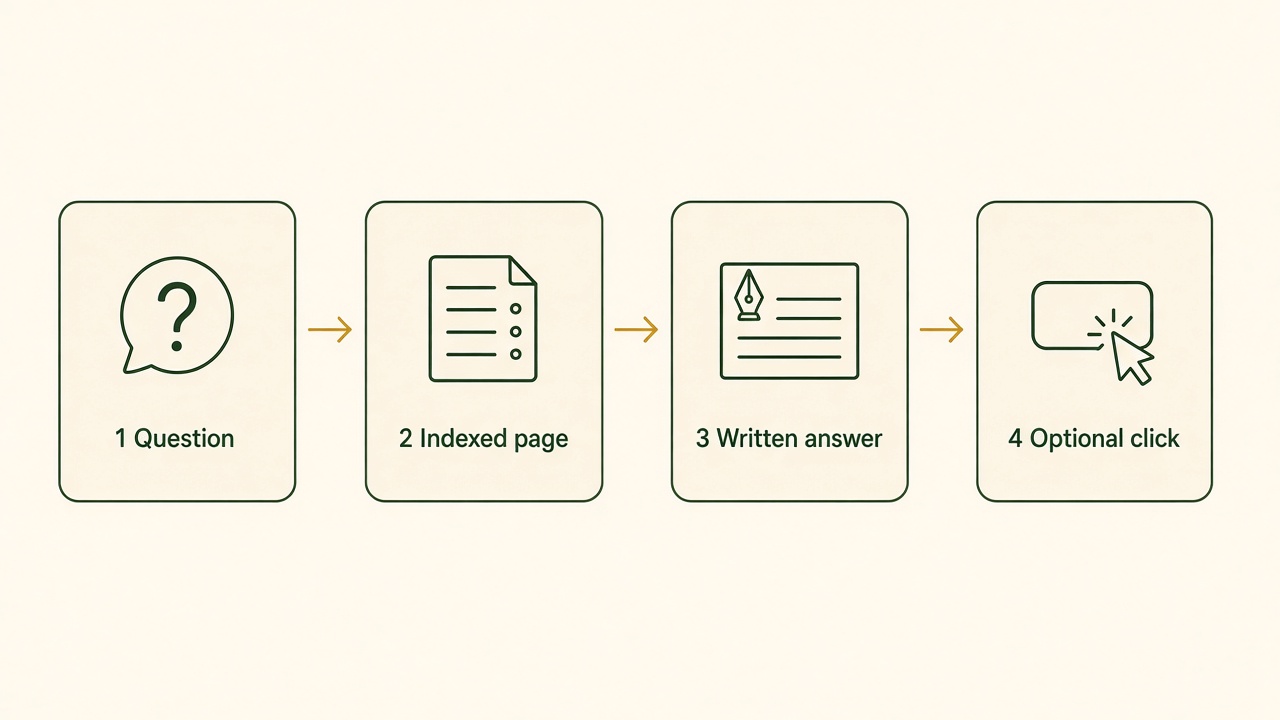
From a question to an optional click
A person asks. A system looks for an indexed page. It may write an answer. A click is possible, not promised.
When I talk about AEO on this site, I mean that chain. I mean preparing a page so a careful reader, and a careful system, can find the question, the answer, and the limits of the answer. I do not mean a hidden markup file, a guaranteed mention, or a service engagement called AEO.
AEO vs traditional SEO
Traditional SEO is the set of practices that help a search engine crawl a site, understand the pages, and decide whether a page is a reasonable result for a query. Titles, headings, internal links, page experience, and trustworthy content all sit inside that work. AEO does not replace that set. It asks an extra question: if the result is a written answer, can this page support that answer without being distorted? The neighboring guide on generative search optimization stays on the written summary itself. This page stays on whether your page can support that answer.
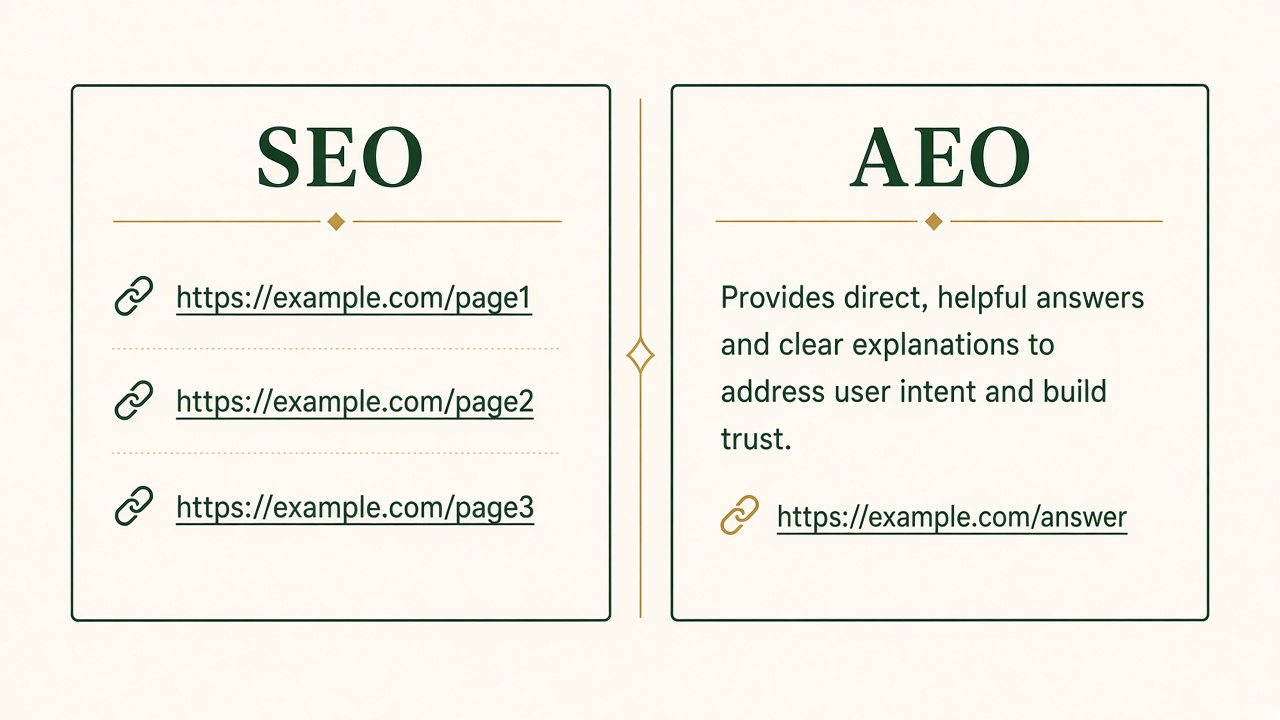
A list of links, or a written answer
SEO is the work of earning a place in a list of results. AEO asks whether the same page can support a direct answer without the sentence becoming wrong.
The difference shows up in what you measure. Classic SEO often watches impressions, average position, and clicks in a search performance report. AEO adds a less visible outcome: whether an answer experience used your wording, linked to you, or ignored you. You will not get a complete report of that second outcome from a public dashboard. Pretending that you can is how AEO advice becomes sales copy.
Google has been explicit that the older fundamentals still carry the newer features. Its AI features documentation says a page is eligible when it is indexed and can be shown with a snippet, and that the same page experience, internal links, and visible text still matter. It also documents preview controls such as nosnippet or noindex if you want to limit how content is featured, including in AI formats. Restrictive preview settings also limit how content can appear in those formats.
So the practical distinction is this. SEO asks whether the page can rank as a link. AEO asks whether the page can be quoted or linked from an answer without the quote becoming wrong. A page can rank and still be a poor source for a one-sentence answer, because the fact is buried, hedged into nonsense, or out of date. A page can also be a clear answer and still not be selected. Both results are normal.
People also ask whether AI chatbots use SEO to generate answers. Some do, in the limited sense that they retrieve indexed pages. Some do not. A model can answer from prior training without opening your URL. Even when a system retrieves pages, the ranking signals that matter for a classic results page are not a contract for the generated sentence. SEO makes you eligible to be found. It does not dictate the paragraph a model writes.
Featured snippets are a useful comparison, not a synonym. A featured snippet is a selected extract from a page, shown with a link, under rules Google has used for years. An AI Overview is a generated summary that may draw on more than one page. Optimizing only for the older snippet format, by stuffing a definition into the first paragraph and nothing else, can make a thin page. Google’s generative guidance warns against commodity pages that restate common knowledge without a point of view.
Canonical tags still matter for the ordinary reason. If the same answer exists on several URLs, a canonical helps search systems understand which URL you prefer. AI answers do not create a new canonical rule. If you split one explanation across near-duplicate URLs just to chase different wordings of a question, you make the site harder to understand, not more quotable.
Long-tail questions still matter, but not as an excuse to publish a page for every slight variation. Google’s generative optimization guide says its systems can understand relevance even when the query and the page are not an exact match, and that creating separate pages for every variation primarily to manipulate rankings violates scaled content abuse policies. AEO is not a license to multiply thin FAQs.
Why AEO matters today
AEO matters because the place where a person first reads an answer has moved. They may still click through. They may also stop at the overview, the chat reply, or the spoken sentence. If your business depends on being understood, you should know how those surfaces work, even if you never try to “rank inside” them as a project.
The demand is visible in how established marketing companies talk about their own tools. HubSpot’s writing on search AI treats appearance inside generated answers as something marketing teams are already planning for, alongside featured snippets, intent, and authority. That is a trend signal. It is not a benchmark you must hit, and it is not evidence that a small site will be cited if it copies a template.
Google has also published a dedicated guide, Optimizing your website for generative AI features on Google Search. The guide’s emphasis is not a new trick. It says unique, compelling, useful content is likely to matter more than other tactics. It describes non-commodity content as work that brings experience or a point of view, rather than a generic list anyone could write. It says there is no ideal page length for generative features, and that you should not rewrite a page in a special style just for AI systems.
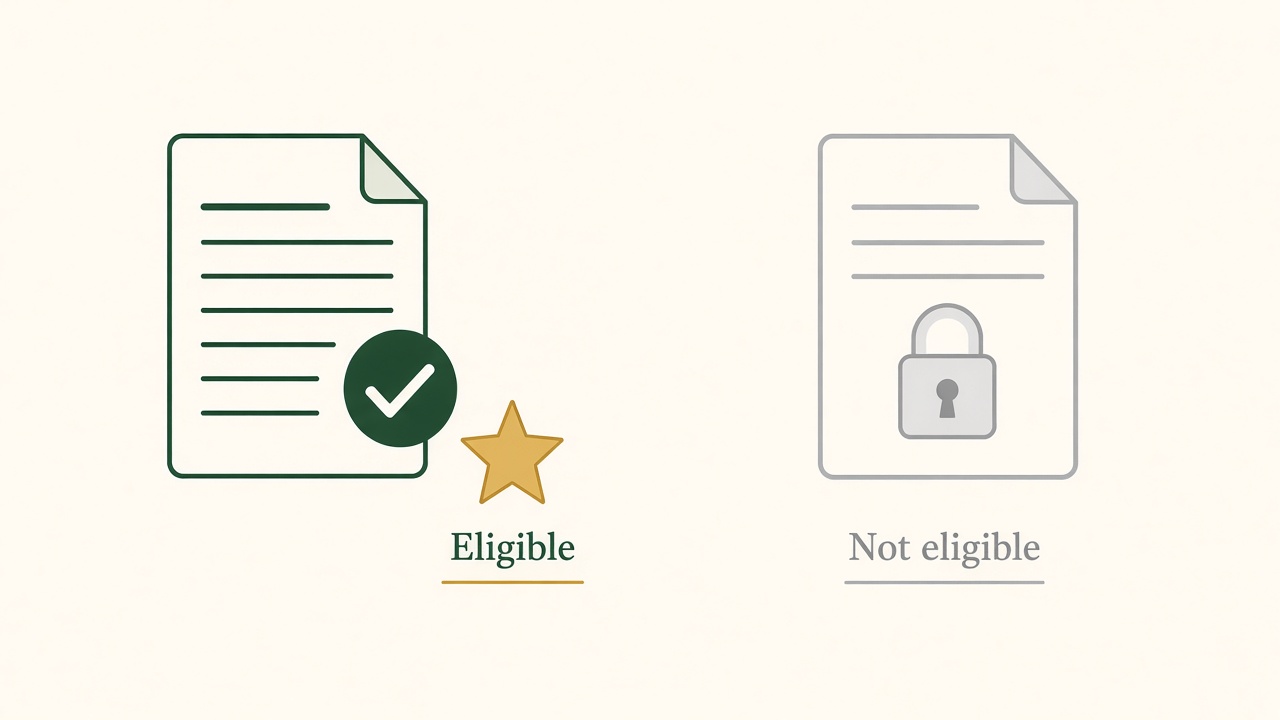
Indexed and snippet-eligible, or not
Google says a supporting link in AI Overviews or AI Mode starts with an indexed page that can be shown with a snippet. A blocked or hidden page is not in that position.
That last point is easy to miss. AEO matters as a way to avoid wasted work. Teams hear that they must chunk every article into tiny blocks, add a new schema type, or publish an llms.txt file as a condition of being mentioned. Google’s AI features documentation says you do not need new machine-readable files or special markup to appear in AI Overviews or AI Mode. Spending a quarter on a file Google says is unnecessary is not a strategy. Spending the quarter on a page that actually answers the customer’s question still is.
For a founder, the stakes are practical. A wrong sentence in an overview can send a buyer to you with a false expectation, or it can skip you entirely. You cannot control the sentence. You can control whether your own page states the fact, the limit, and the date in words a person can check. That is the part of AEO I am willing to teach.
I also want the brand of this site to stay clear. Verthilix is founder-led software, built in India, with a person behind it. It is not a corporate SEO consultancy. When this page links to the Growth Duo subscription, that link is about software for making videos and articles, not about an AEO retainer. The education and the product are related only because both care about content that a person can review before it goes live.
Key strategies for AEO
The strategies below are the ones that survive contact with Google’s own pages. They are not a ranking recipe. They are the checks I would want on a page before anyone claimed it was “optimized for answers.” If a tool helped write the draft, the separate guide on AI content quality is where the fact check and the human approval are spelled out.
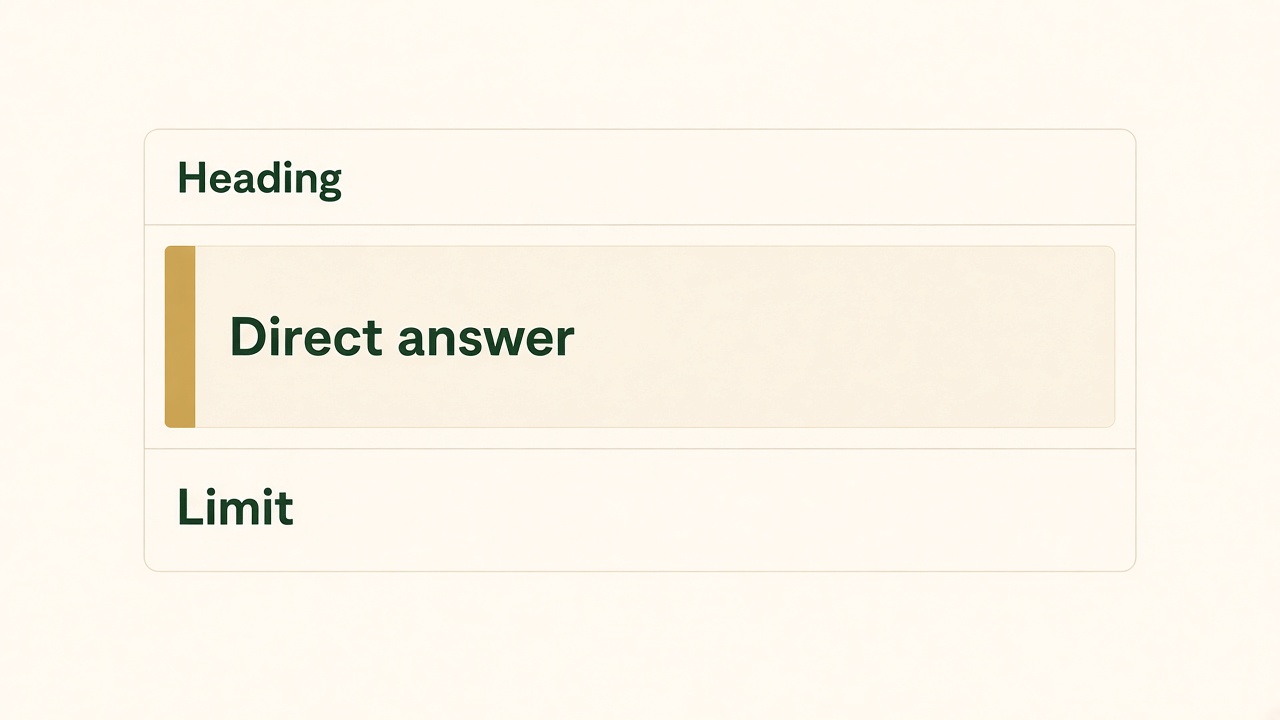
Heading, direct answer, then the limit
Put the question in the heading, the usable sentence next, and the condition in the same section. An answer that drops the limit is the sentence you do not want repeated.
Focusing on intent and context
Intent is the job the question is trying to do. “What is AEO?” wants a definition. “How do I optimize for Google’s AI answers?” wants steps and limits. “Will my site appear?” wants an honest no-promise answer. If one page tries to satisfy all three by repeating the keyword, it helps none of them.
Context is the situation around the question. A technical SEO manager and a founder asking the same words do not need the same depth, but they do need the same facts. State who the page is for near the start. State what you will not claim. Then answer the question in sentences that can stand alone, because an answer system may lift one or two of them.
HubSpot’s search AI guidance points to the same habit: tailor the page to a specific need, and make the answer scannable. A heading that repeats the question, followed by a direct paragraph, is still the most reliable pattern. It helps a person skimming on a phone. It also gives a retrieval system a clean passage without requiring you to write in a special “AI voice.”
Conversational queries are longer than old keyword strings. People ask follow-up questions. Google has noted that in AI search experiences, users ask longer and more specific questions, then follow up. You do not need a new URL for every follow-up. You do need the main page to anticipate the next reasonable question and answer it in a later section, the way this page moves from definition to measurement.
Internal links are part of context. A reader who wants the person behind this explanation should be able to reach the Verthilix founder-led software homepage. A reader who wants the software offer should reach the Growth Duo page by a label that says what it is. Links that exist only to pass a made-up authority score do not help the reader, and they do not make an answer more true.
Structured data and featured snippets
Structured data is a machine-readable description of what is already on the page. Google’s introduction to structured data explains that markup can make a page eligible for certain rich results when it follows the policies. The same documentation, and the AI features page, say the markup must match the visible content. Invisible FAQ text that exists only in JSON-LD is not a strategy. It is a mismatch.
For AI Overviews and AI Mode, Google’s position is narrower than many AEO checklists. There is no special schema required to be eligible. FAQ markup does not buy a citation. What FAQ markup can still do, when the questions and answers are visible, is describe a real Q&A section for classic search features that support it. This page uses FAQPage markup for the questions at the bottom because those questions are also written on the page, not because markup is an AEO switch.
Featured snippets reward passages that answer a question cleanly. That remains useful. Write the answer first, then the conditions. If the true answer is “it depends,” say what it depends on in the next sentence. Do not hide the condition below a fold of adjectives. A snippet or an overview that drops the condition will still be wrong sometimes. Your page should make the condition easy to find when the person clicks.
Preview controls belong in this section because they are how you opt out. If you do not want a passage used as a snippet, Google documents controls such as nosnippet, data-nosnippet, max-snippet, and noindex. Using them will also limit AI features that rely on those previews. Choose that on purpose. Do not add the tags by accident in a template and then wonder why the page never appears.
Content depth and accuracy
Depth is not a word count. Google has said for years that it does not have a preferred word count, including in its helpful content guidance. Depth is whether a knowledgeable reader can finish the page without having to search again for the obvious missing piece. For AEO, the missing piece is usually the limit: what the system will not do, what you did not measure, and what has changed since the page was written.
Accuracy is the part answer engines punish in public even when they do not “rank” you. A generated overview that repeats your outdated price or your old product limit becomes your problem when the buyer arrives. Date the page. Date claims that depend on a product screen. When Google changes a feature name, update the sentence. Thin pages and stale pages are the pitfalls I see most often, ahead of any missing schema type.
Google’s guidance on AI-generated content is the right standard for accuracy when a tool helped write the draft. Using automation to manipulate rankings is spam. Using automation to help create useful content is not, by itself, against the guidelines. The content is judged as content. If it is original, helpful, and shows experience, expertise, authoritativeness, and trust, it might do well. If it does not, it might not. AI does not add a special gain.
The people-first questions in Google’s helpful content documentation are still the accuracy checklist. Who created the page? How much first-hand knowledge does it show? Would someone leave feeling they need to search again? Are you writing to a word count you heard Google prefers? Are you covering a topic only because it looks like traffic? I use those questions on my own pages, including this one. The length is here because the topic needs the distinctions, not because a number ranks.
Originality matters more once many sites publish the same definition of AEO. Google’s generative guide contrasts a first-hand account with a summary of what is already everywhere. On this site, the first-hand part is simple: I build software, I do not sell AEO, and I will not tell you a citation is included. That is a point of view. A page that only rearranges other people’s AEO definitions is commodity content, and commodity content is what answer systems can already produce without you.
Voice search and conversational queries
Voice search is AEO in spoken form. A person asks a full question. An assistant tries to answer in a few seconds. The page behind that answer still has to exist, and the sentence that gets read aloud has to be true without the paragraph that followed it on the screen.
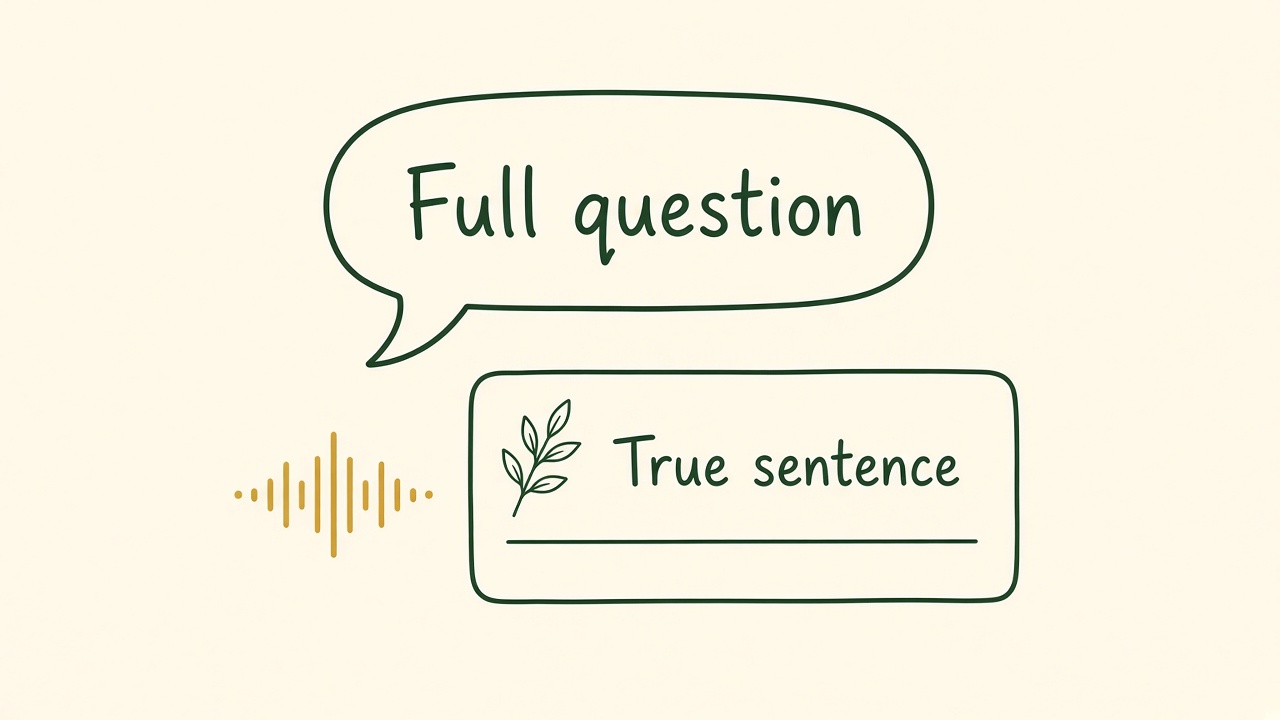
A full question needs a true sentence
The spoken or chat reply may be one sentence. Write that sentence so it stays true without the paragraph underneath it.
Conversational queries add a second turn. Someone asks what AEO is, then asks whether it hurts SEO, then asks what to do on Monday. A single well-structured page can carry those turns as headings. A pile of near-duplicate posts cannot. Assistants and chat search products, including experiences people describe as Bing Chat or Copilot, are built around that back-and-forth. Your site does not need a different keyword for each turn. It needs the follow-up answered where the first answer lives.
Write the spoken sentence on purpose. Short does not mean vague. “AEO means adding a secret schema file” is short and false. “AEO means preparing a page so an answer system can use it, without any guarantee you will be cited” is longer and usable. If you would be uncomfortable hearing the sentence alone, do not leave it as the first line under the heading.
Captions and transcripts matter when the answer is a video. A voice result cannot read text that exists only as burned-in pixels. If you publish a short explanation, put the same claims in HTML. That is an accessibility practice and a search practice at the same time. It is also how you keep the spoken claim and the written claim from drifting apart.
Local and branded questions show up in voice as well. “Who builds Verthilix?” should resolve to a page that names me, Roktim Saha, and says the work is founder-led. That is ordinary identity information. It does not require a voice-search plugin. It requires the homepage and the founder-led software page to agree with this guide.
Monitoring and tools for AEO
Google now gives site owners a dedicated view of generative AI visibility. In its announcement of generative AI performance reports, Search Console shows how often your URLs appeared in generative AI features in Search and Discover, which pages appeared, and how that visibility breaks down by country, device, and date. Those impressions are also included in the overall performance report. The report does not print the answer text, and it does not prove that a sentence was quoted from you. Anyone who sells a complete list of every citation is still ahead of what Google publishes.
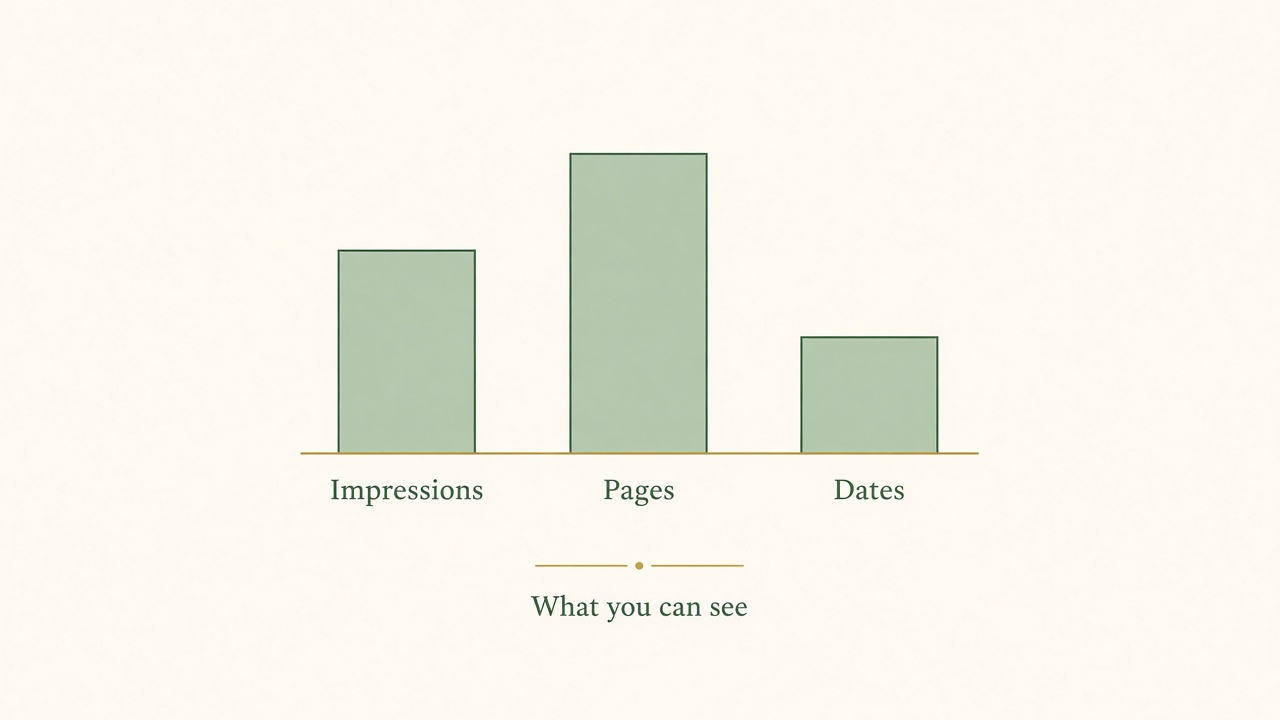
Fields in the generative AI performance report
Search Console can show impressions, pages, and dates for AI Overviews and AI Mode. The bars in this drawing are labels, not a sample of anyone’s traffic.
Start with indexing. If Google has not indexed the page, it is not eligible to be a supporting link in AI Overviews or AI Mode. Search Console tells you whether a URL is indexed and which queries triggered impressions. Use that before you invent an AEO score. The wider habit of reading those reports, without inventing a return, is the subject of the content marketing analytics guide.
Then test the question the way a customer would. Ask it in Google. Ask a follow-up. Note the date, the wording of the overview, and whether your URL appears. Repeat later when you change the page. This is a sample, not a census. It stops you from arguing about a citation you have never looked at.
HubSpot has publicly discussed an AEO-oriented feature in its own marketing product. I mention that only as a sign that large software companies are naming the problem. I do not use their beta, and I do not claim it measures citations for you. The useful idea to copy is the checklist in their search AI article: quality, a scannable direct answer, intent, and authority. Those are editorial checks. They are not a dashboard.
On the software I build, the BloGoose content engine can help a team research and draft articles and look at SEO readiness, including scores that flag incomplete pages. A score is a checklist inside the product. It is not a ranking, and it is not an AI citation. I will not tell you that a higher score puts you inside an overview. I will tell you that a page with no clear question, no sources, and no review is a weak page no matter which engine reads it.
The Growth Duo subscription is the offer that combines that article workflow with Vlozy for short product videos. It is software access with a person behind it. It is not an AEO service, and the offer page should stay the place where plan limits and review duties are stated. If you only needed this explanation, you do not need the subscription. If you want help producing the pages you have decided are worth writing, that is a different decision, made on the offer page after you read the terms.
Tools that promise “ChatGPT SEO” as a button are worth a slow reading. Ask what they count, how often they refresh, and what they do when the model answer changes tomorrow. If the only output is a list of keywords to paste into a generator, you are back at the spam problem Google already described.
Common pitfalls
The first pitfall is thin content with a fashionable heading. A 300-word definition of AEO that repeats the keyword and links out to a tool does not answer how AEO differs from SEO, what AI Overviews require, or how to tell success from hope. Answer systems can produce that page without you. Publishing it does not make you a source.
The second pitfall is outdated information. Feature names move. AI Overviews, AI Mode, and third-party chat products are not stable labels. A page that still describes a beta screen from last year as if it were the only surface will be quoted incorrectly. Put a visible date on the article. When you rely on a Google document, link to it so a reader can see whether Google has changed the page.
The third pitfall is special files and special schema as a substitute for the article. Google’s AI features documentation says you do not need a new machine-readable file or a special schema type. Teams still spend time on files because a checklist told them to. If you maintain a file for your own editorial process, fine. Do not tell yourself it is the reason you will be cited.
The fourth pitfall is scaled question pages. Covering every People Also Ask variant as its own URL, with the same paragraphs rearranged, is the pattern Google associates with scaled content abuse. Keep the related questions on one substantial guide unless each URL has a genuinely different job.
The fifth pitfall is promising citations. I do not promise them on the Growth Duo page, and I will not promise them here. A page can be eligible and still not be chosen. A model can describe your topic without linking to you. If a vendor’s offer only makes sense when a citation is guaranteed, the offer is ahead of what the systems actually do.
The sixth pitfall is ignoring preview controls and then blaming the model. If the template sets noindex or a strict snippet limit, AI features that depend on snippets will not treat the page as an open source. Check the live HTML before you diagnose the prose.
The seventh pitfall is writing for a word count. This guide is long because the distinctions are easy to smear together. Length without those distinctions is the failure mode Google already tells creators to avoid. Add sections when a reader would otherwise have to search again. Stop when the question, the method, and the limits are on the page.
Case study: optimizing a FAQ for an AI answer
This is a worked example, not a customer story. I am using a question founders already ask me: “Do you sell answer engine optimization or generative engine optimization?” The unsafe FAQ answer is a slogan. The usable FAQ answer states the offer, the limit, and where to read more.
Start with the question in the words a person would type or speak. Do not retitle it as “AEO solutions for synergistic growth.” The heading is the query. Under it, the first sentences should stand alone:
Question. Do you sell Answer Engine Optimization?
Direct answer. No. I do not sell AEO or GEO as a service, and I do not promise that an AI system will cite your site.
What I do sell. Software. The Growth Duo is a subscription for Vlozy and BloGoose. You still review what gets published.
Where to learn the concept. This guide explains AEO without turning it into a package.
What would make the answer false. A sentence that says a plan includes citations, or a schema block that claims a service the page does not offer.
That block is the whole optimization. The question matches the intent. The answer is short enough to lift and still true. The limit is in the same breath as the offer. The internal link goes to a page that teaches the term, which is this one, or from this one back to the offer only when the reader wants software. Structured data, if you add it, repeats those visible sentences and does not add a fake service.
Now change one fact and watch the page rot. Suppose the offer later includes a written research memo. The FAQ that still says “I do not sell research” becomes the sentence an overview might repeat. The fix is not a new schema type. The fix is editing the visible answer and the date. AEO maintenance is editorial maintenance.
You can test the example without a tool. Read only the direct-answer sentence aloud. If it still matches the product, the FAQ is fit to be quoted. If you need the next three paragraphs to stop it being misleading, rewrite the first sentence until it carries the limit. Then, and only then, worry about whether a search feature displays it.
The same pattern works for a product FAQ that is not about AEO. “What is not included?” should list the human work the software does not do. “Will this rank my site?” should say that useful pages can become eligible and that eligibility is not a promise. Those answers are already the right raw material for answer engines because they prefer a clear no to a foggy yes.
Questions people ask about AEO
What is Answer Engine Optimization (AEO)?
It is the practice of preparing pages so they can be understood when a search or assistant system answers a question directly, not only when it lists links. It still depends on a clear question, an accurate page, and ordinary eligibility to be indexed and shown.
How does AEO differ from SEO?
SEO is the broader work of making a page crawlable, understandable, and useful in classic results. AEO asks whether that page can also support a direct answer. Google says the fundamentals still apply, and that AI Overviews and AI Mode add no extra technical requirements.
Do AI chatbots use SEO to generate answers?
Some answer experiences retrieve indexed pages and show links. Others reply from a model without looking up your URL. SEO can make a page possible to retrieve. It does not control the sentence a model writes, and it does not mean every chatbot consulted you.
How do I optimize content for Google’s AI answers?
Follow Google’s published guidance. Keep the page crawlable and indexed, put the important information in text, match structured data to the visible page, and write unique people-first content. Do not rely on a special AI file or a special schema type. Google says those are not required for AI Overviews or AI Mode.
Will my site appear in AI-generated answers?
A useful indexed page can become eligible to be considered. Eligibility is not a promise that any particular answer will cite you. I do not sell AEO, and I do not promise citations.
How does voice search factor into AEO?
Voice queries are usually full questions, and the reply may be a single sentence. Write that sentence so it stays true alone, then give the conditions underneath. Voice search does not replace an accurate HTML page.
What is Google’s AI Overviews feature?
It is a Google Search experience that can show an AI-written summary with supporting links. Google’s documentation says a page must be indexed and eligible to appear with a snippet. There are no additional technical requirements beyond that.
Does AEO require special content strategies?
It requires the people-first habits Google already publishes: a real question, useful original detail, and pages that are not produced mainly to manipulate rankings. A separate thin page for every wording of a question is not a special strategy. Google warns that doing this primarily to influence generative results violates its scaled content policies.
How important is schema or structured data for AEO?
Structured data can support certain classic rich results when it matches the visible text and follows Google’s policies. It is not a required switch for AI Overviews or AI Mode. Markup that visitors cannot see on the page does not make an answer true.
Does Google publish any AEO best practices?
Google does not publish a product named AEO. It does publish the helpful content guide, the AI-generated content post, the AI features documentation, and the generative AI optimization guide. Those are the best practices that exist in public. They say SEO fundamentals remain relevant.
How do I measure AEO success?
Use Search Console, including the generative AI performance report, for impressions of your URLs in AI Overviews and AI Mode. That view does not show the wording of the answer or prove a citation. Also confirm the page is indexed, and keep a dated note when you read an overview yourself. A product SEO score is not that proof.
Does AEO hurt SEO?
A clear, accurate answer does not conflict with SEO. Thin pages, stale facts, and automation used mainly to manipulate rankings can hurt you under the same spam and helpful-content standards Google already applies. AEO is not a separate penalty and not a separate reward.
If you want the concept, stay on this page. If you want software that helps you make the videos and articles you still review yourself, read the Growth Duo subscription. Learn more about optimizing content, and see how BloGoose helps with SEO readiness, without treating readiness as a citation.
Read the Growth Duo offerThe offer page states what is included, what you still review, and what is not promised.